This section of the site is designed to help family members orient to the activities and culture of the State Guard in their state, as well as the military lifestyle. Please navigate through the sub-articles here to learn a little more about what your soldier is doing for the State and its citizens. These may vary slightly from state to state, as these were created by the 1BDEFRG.org for the state of Texas.
Disclaimer
This content has not been approved by any State Military Department or State Guard. The Contents were developed solely by the State Guard Family Readiness Group and are intended as an orientation guide for family members to better understand a limited amount of military knowledge, customs, and courtesies common to the State Guard and the military in general.
All content on this site is copyrighted by State Guard Family Readiness Group (SGFRG) and may not be used for any reason without express written consent.
Getting through the Alphabet SoupOften, you may hear your soldier reference military jargon or "Alphabet Soup." What they are referring to are abbreviations and acronyms used in the military. And the military loves their three and four letter words, and we do not mean curse words. This is a common list of those abbreviations you may hear often: |
|
|
|
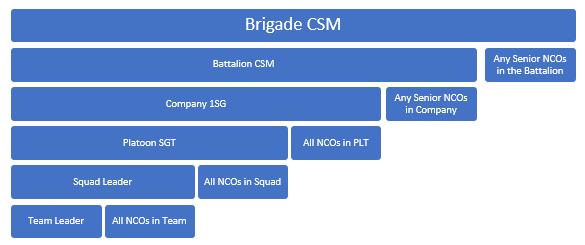
NCO Support Chain (or Channel)
The NCO Support Chain is a distinct network of leadership in which enlisted Non-Commissioned Officers (NCOs) support and maintain enlisted matters to ensure the success of the unit, morale, professional development, and mentoring. The NCO Support Chain engages all the NCOs in the lowest-level unit and works through the chain to the next level (if needed) to address an issue or to help develop enlisted soldiers into the next generation of NCOs.
This diagram illustrates the typical NCO Support Chain within a Brigade
Unit Chain of Command
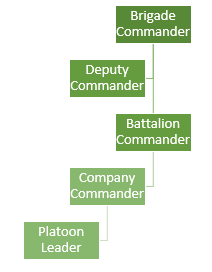
The unit chain of command (CoC) is comprised of the commanders within the unit. Soldiers often confuse or combine the chain of command and the NCO Support Chain. These are two different structures within the unit. The NCO Support Chain supports and advises the commanders in various roles, such as the Brigade or Battalion Command Sergeants-Major (CSM), or the Company First Sergeant (1SG).
This diagram shows the typical Chain of Command within the 1st Brigade.
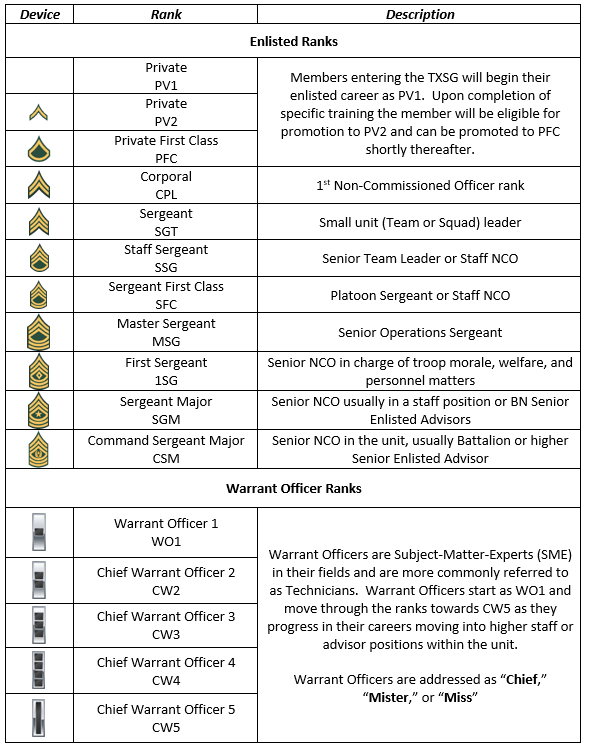
This chart illustrates the rank devices of enlisted soldiers and Warrant Officers. Enlisted soldiers are the backbone of the State Guard and do most of the heavy lifting. Warrant Officers are Technical experts and advisors.

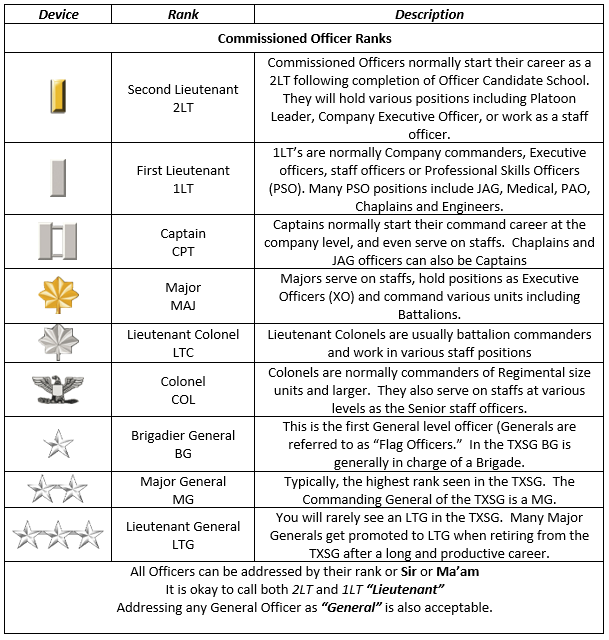
This chart illustrates the different commissioned officer ranks you may encounter when around members of the State Guard.
.PNG)
General Roles of a TXSG Soldier
This page is still under construction!
This page will provide some general guidance of what a soldier may do while at drill, annual training or on a mission. Since most soldiers start out at the lower levels as an enlisted soldier or officer we will start with these and work up to the higher levels.
Junior Enlisted



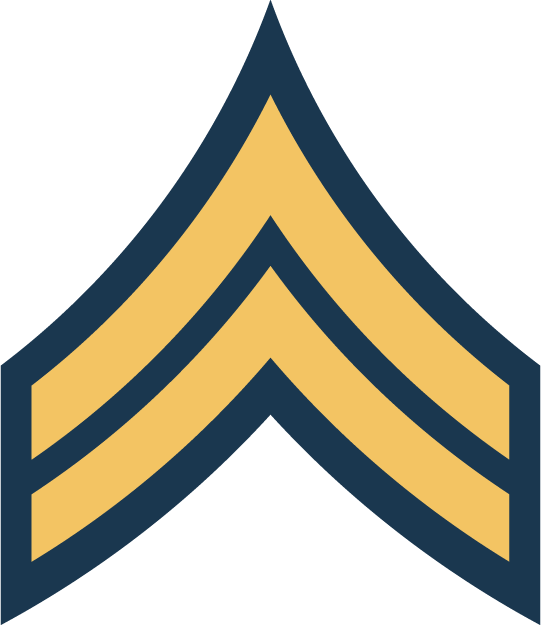
Junior Enlisted (PVT to CPL) Most soldiers will enter the TXSG and start their career as a PVT, unless they are considered a Professional Skills Officer, which we will cover later. Privates generally start by learning basic soldier skills like marching (drill and ceremony), military customs and courtesies and then move into their specialized job training. Enlisted soldiers start their career by attending Basic Orientation Training (BOT). TXSG specialized skills start with training in Shelter Management, Emergency Tracking Network, PODS, and Military Emergency Management Specialists. Soldiers also engage in lot of FEMA self study courses to learn more about disaster response. Once a soldier makes the rank of Corporal (CPL) they start to learn small unit leadership as this is their first step into the NCO Corps.
Junior Officers


Junior Officers (2LT and 1LT) are much like junior enlisted, except they may have a college degree or a specialized skill set (Professional Skills Officer). The amount of knowledge about the military is usually similar to that of a Junior Enlisted soldier. Junior Officers start their career either by attending Officer Candidate School (OCS), or Direct Commissioned Officer Orientation Course (DCOOC). Commissioned officers are expected to learn more quickly than enlisted soldiers and right after OCS they are typically assigned as a Platoon Leader. PSO's are always placed into a specialized role or staff role, they do not command soldiers unless they are in same specialty, i.e. medical officers in a medical company.
Junior officers and enlisted are expected to deploy, attend training, and grow their military skills to become the next generation of leaders in the TXSG, as such you should expect to see your soldier going on deployments and attending training events as often as possible. Deployments, training and professional military education helps your soldier to see different leadership styles as well as issues that they can help to mitigate across the force.
Non-Commissioned Officers (NCOs):
Non-Commissioned officers are considered leaders and mentors of soldiers. Depending on the rank of your soldier, you may see them spending more time working on TXSG business as they work with their junior enlisted soldiers, or even as they mentor their new platoon leaders. NCOs will typically have a leaders book with them, which helps them to understand, mentor, and lead their team. The following paragraphs will provide more details on the size of the team your soldier may be managing, depending on their rank.
Sergeant (SGT) or Staff Sergeant (SSG)
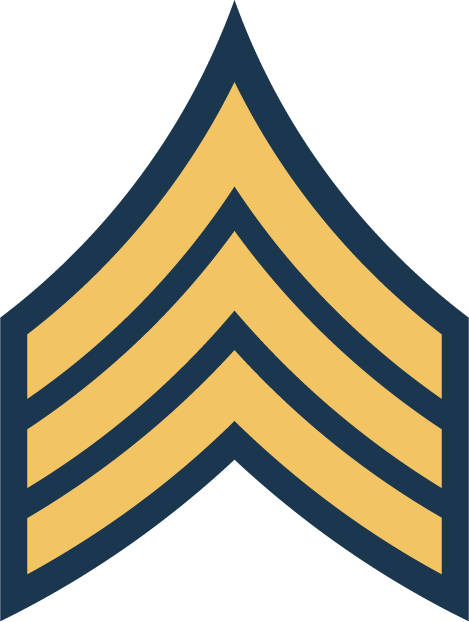

Sergeants or Staff Sergeants are usually team leaders and typically lead small teams of soldiers. These teams can range from four to ten soldiers, depending on the unit and specialized skills. Some soldiers, such as boat or dive team members, may manage smaller teams due to their team's organizational structure. With the structure of the TXSG, some Sergeants or Staff Sergeants may find themselves filling roles which are much higher in responsibility.
Sergeant First Class (SFC)

A Sergeant First Class typically fills roles as platoon sergeants (PLT SGT) and can have teams between ten and thirty soldiers. A Platoon Sergeant has the primary role of managing and mentoring the team leaders (SGTs and SSGs), and assisting with the training and mentoring of the junior enlisted. The Platoon Sergeant also serves as the enlisted advisor to the Platoon Leader and helps to mentor and develop the junior officer(s).
Master Sergeant (MSG) or First Sergeant (1SG)


A Master Sergeant typically fills an operations role as a senior enlisted advisor for a unit. Their years of experience in the military allow them to provide vast amounts of insight into operational tasks and the execution of missions. Master Sergeants are often referred to as "Top" because that is where most enlisted personnel finish their careers if they reach retirement, unless they want to move into administrative roles such as 1SG, SGM, or CSM. Master Sergeants are a wealth of knowledge, but can be a little cranky without their coffee, so watch out. First Sergeants are a lot like Master Sergeants, except they assume responsibility for the company's enlisted administrative issues. First Sergeants work for a company commander and have to keep all enlisted issues (troublemakers) in check, as well as manage the company's enlisted readiness. Bringing the 1SG coffee may work if you have cookies. An MSG may have a team of 10 to 30 soldiers, or they may work in a staff position managing only a couple of soldiers. A 1SG will have an entire company to work with, which in the TXSG could be thirty to sixty enlisted soldiers.
Sergeant Major (SGM) or Command Sergeant Major (CSM)

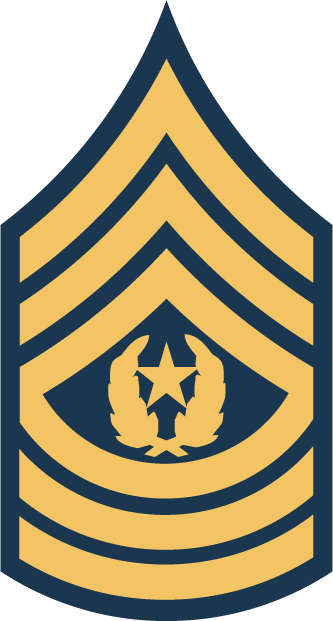
A Sergeant Major will typically work on a staff and not have to worry about too many soldiers unless they have a large enlisted staff. Some Sergeants Major may fill a vacant 1SG role from time to time. A Command Sergeant Major is typically the senior enlisted advisor to a commander at the battalion level or higher. In the 1st Brigade, there are five CSMs, all with an enlisted personnel count of sixty or more. The Brigade CSM is responsible for more than four-hundred and fifty enlisted personnel. A CSM role can be very time-consuming.